


Understanding SIL and SDA: What’s the Difference?

When exploring NDIS housing supports, many people come across the terms SIL and SDA, but understanding the difference between the two can often feel confusing.
At WEmpower, we regularly support participants, families, and Support Coordinators navigating housing options and trying to understand what supports may be suitable for their individual needs and goals.
While SIL and SDA are often linked together, they are actually two very different types of NDIS supports.

What is SIL?
Supported Independent Living (SIL) refers to the supports a person receives to help them live as independently as possible in their home.
SIL is about the day-to-day assistance provided by support workers and can include things like:
Personal care
Assistance with cooking and meals
Medication support
Household tasks
Community access
Building daily living skills
Overnight or 24/7 support if required
SIL supports are generally suited to participants who require a higher level of ongoing assistance at home.
Importantly, SIL is not the house itself - it is the support delivered within the home.

What is SDA?
Specialist Disability Accommodation (SDA) is the physical housing designed for people with extreme functional impairment or very high support needs.
These homes are specially built or modified to improve accessibility, safety, and independence.
SDA properties may include features such as:
Wheelchair accessibility
Wide hallways and open spaces
Ceiling hoists
High physical support designs
Assistive technology
Improved safety features
Robust housing designs
Accessible bathrooms and kitchens
SDA funding covers the housing component - not the daily support staff.
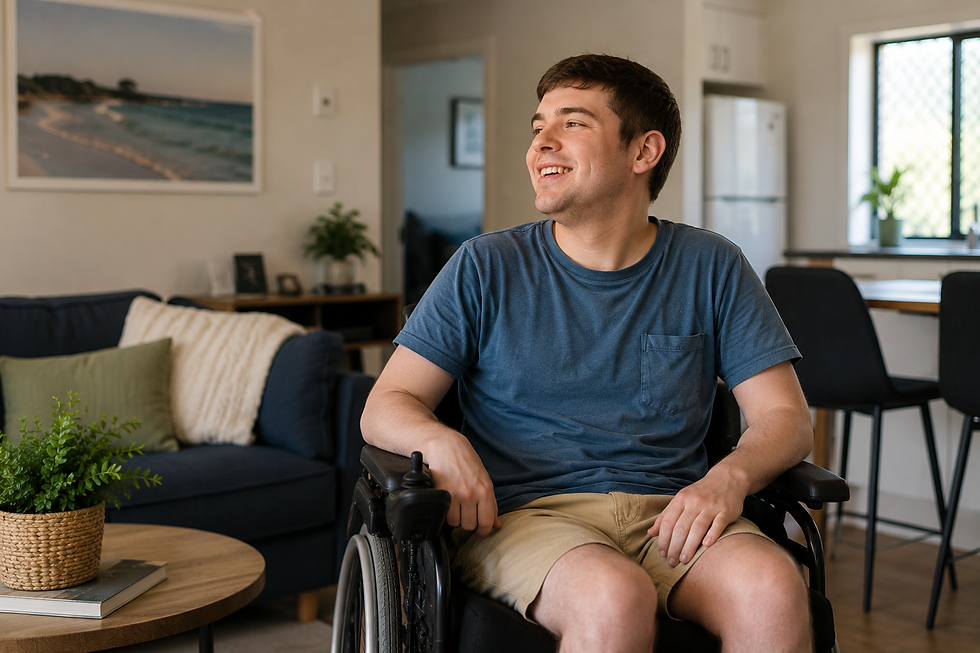
SIL vs SDA: What’s the Difference?
The easiest way to think about it is:
SDA = the home
SIL = the supports within the home
Some participants may have SIL funding without SDA funding.
Some may have SDA funding alongside SIL supports.
Others may live independently with lower-level supports that are not SIL-funded at all.
Every participant’s situation is different depending on their goals, support needs, living preferences, and NDIS funding.
Can You Have SIL Without SDA?
Yes - absolutely.
Many participants receive SIL supports in standard homes, shared living arrangements, or private rentals.
A participant does not need SDA funding to access SIL supports.
Likewise, not every person living in SDA will automatically have SIL funding.
The NDIS assesses both supports separately.
Shared Living vs Independent Living
SIL and SDA supports can look very different depending on the participant.
Some people may prefer:
Shared homes with other participants
Social and community-focused living environments
24/7 support models
Others may prefer:
Living alone
More independent arrangements
Drop-in supports
Quieter environment
There is no “right” option - the best arrangement is the one that supports the participant’s goals, wellbeing, and independence.

How Are SIL and SDA Approved?
Both SIL and SDA usually require supporting evidence and assessments as part of the NDIS planning process.
This may involve:
Functional Capacity Assessments (FCA)
Allied Health reports
Support needs assessments
Housing goals discussions
Evidence from providers, families, and support networks
The NDIS will consider whether the supports are considered reasonable and necessary based on the participant’s individual circumstances.
Choosing the Right Provider Matters
Finding the right home and support team can make a huge difference to a participant’s quality of life.
Good providers focus on:
Participant choice and control
Compatibility within shared homes
Skill-building and independence
Safety and quality of care
Community inclusion
Person-centred supports
Housing should feel like home - not just a service.
How WEmpower Can Help
At WEmpower, we support participants across NSW with:
Supported Independent Living (SIL)
Specialist Disability Accommodation (SDA)
Community supports
Allied Health services
Capacity building and independence supports

Our team works closely with participants, families, guardians, and Support Coordinators to help create living arrangements that feel safe, empowering, and personalised.
If you would like to learn more about SIL, SDA, or current housing opportunities, contact the team at WEmpower today.


Comments